Explore Cretan

History

History

Crete’s strategic location at the crossroads of the ancient civilizations of the Mediterranean is the main reason for the continuous claim of the island by many occupants.

Crete managed to keep its unique and strong character till today. Religion, glorious history and the wild Cretan terrain formed the personality of Cretans, who held their Greek soul after many centuries of slavery. Apart from the scattered archaeological sites and monuments of spiritual wealth, the visitor has the chance to see the rare and priceless findings of excavations at the various museums and collections throughout the island.

Crete is the birthplace of Zeus, the ruler of the gods, people and hospitality. Even today the hospitality of the Cretans is more than a ritual. The first European civilization, the Minoans, emerged here between 2800 BC and 1400 BC. Even today, the palaces of Knossos, Phaestus, Malia and Zakros reflect the splendor of the Minoan civilization through the masterpieces of architecture, pottery, gold, silversmithing and painting. The most powerful fleet in the then known world, as evidenced by the different findings across the Mediterranean, brought wealth to Crete from trading the famous Cretan cypress and its agricultural products. This brilliant course was terminated in 1400 BC when the Achaeans and the Dorians made their presence on the island, founding new towns (eg Lato, Polyrhenea) and gave the baton to the Classical Greek civilization.

After the conquest of Crete by the Romans, the capital moved to Gortys, which subsequently became the capital of the Roman province of Crete and Cyrene. During his journey to Rome, Saint Paul stopped in Crete and proclaimed Christianity, beginning a century-old monastic tradition in more remote areas. The island became an important Christian center as depicted in hundreds of religious monuments, scattered everywhere.

In 824AD Crete was conquered by the Arabs, who turned Candia (today’s Iraklion) to a base for pirate attacks in the Mediterranean Sea. After many failed attempts, the Byzantines managed to release Crete in 961, under the commands of the later emperor Nikiforos Fokas, giving a new impetus in Christian tradition on Crete.

After the conquest of Constantinople by the Crusaders in 1204, the Venetians became the new rulers of Crete until 1669. During this period Crete experienced a great economic and spiritual wellbeing. The big cities were rebuilt, decorated with amazing monuments and fortified with massive walls. Moreover, the art reached its apogee with great personalities from the field of hagiography, as El Greco (Dominikos Theotokopoulos) and Michael Damaskinos. Moreover, literature, music and theater thrived and produced masterpieces, like Erotokritos and Erofili. All these were abruptly interrupted in 1669 when Candia, Crete’s last stronghold, surrendered after the longest siege in history by the Ottomans.

Successive revolutions and bloody battles led to the autonomy of Crete in 1897. In 1913 Crete became part of the Greek territory, honoring the longed dream of all Cretans for the Union with Greece. During the Union of Crete, the politician Eleftherios Venizelos came into foreground, who would later become the greatest leader that ever ruled Greece. The struggles, however, of the Cretans did not end here, as the Cretan glory emerged in the Battle of Crete in 1941 and from the ashes of the dozens of villages burnt by the Germans. Thousands of Cretans were executed with their fearless gaze towards the barrel of the German guns, helping to turn the scales in favor of the Allies.

Archaeological Sites

Archaeological Sites

The strategic position of Crete at the crossroads of the ancient Mediterranean civilizations was the main reason for the constant claim of the island by various occupiers. Traces of each occupier are scattered everywhere on the island and are deeply engraved in the customs of the Cretans. Show Map

Read more ...

Fortresses

Fortresses

Crete in ancient times was not threatened by external enemies. The first external enemies of the island were the Romans. Therefore, till then, the fortification of cities was focused on internal enemies. After the Roman Empire (67 BC-330 AD) things changed radically. Crete became a province of the Eastern Roman Empire, which later transformed to the Byzantine Empire. At the same time, several civilizations started developing around the Mediterranean Sea. Thus, Crete, because of its natural and geopolitical position, acquired great importance and became an "apple of discord" for the civilizations of the Mediterranean. During the First Byzantine Period (330-824) things looked calm. For that reason, combined with the internal and external problems of the Empire, the island was on the fringes of the Byzantine interest. Thus, pirate raids increased and the seaside monasteries were fortified to protect themselves. Under these circumstances, the first storm on the island was imminent. The Saracen pirates managed to easily occupy Crete in 824, that was almost defenseless. They settled for 140 years, till 961, during which they fortified the largest town, today’s Heraklion. After continuous failures to reoccupy Crete, Nikiforos Fokas managed to liberate the island from pirates in 961. Then, the Byzantines built new walls, which managed to keep invaders away for a few more centuries. In 1206, Crete passed into the hands of the Genoese, who immediately gave particular importance to the fortification of the island. Within a few years the fortified three castles and 12 fortresses, but still the Venetians managed to occupy the island in 1209. The Venetian Era in Crete lasted for 4.5 centuries and was mainly dependant on the colossal fortification structures. The best Venetian engineers built the Great Castle of Candia (Heraklion). The Turks managed to take over Candia in 1669 after 22 years (!) of besieging and immediately started restoring the Venetian Forts and built a lot of small fortresses across the Cretan Territory, called Koules. The Turks took care of their forts till the end of their presence on the island. Even today, visitors can get an idea of what the fortified cities of Crete were like, as the walls are still in excellent condition. The impressive castles in Chania, Rethymnon and Heraklion and the fortresses on the islands of Souda, Gramvousa, Spinalonga are but a few samples of Cretan fort architecture. Show Map

Read more ...

Myths

Myths

The history of Crete is age–long and should be traced back in the first myths and legends. According to the Greek mythology, Zeus, the father of gods and humans, was born in Crete, where later he secretly copulated with beautiful nymph Europa, who gave her name to our continent. It was here that for the first time resourceful craftsman Daedalus, the constructor of the famous Labyrinth, disregarded the law of gravity and flew away with his son Icarus. Cretan mythology happens to have a unique beauty, an aesthetic wealth which has made it well-loved throughout the world. Cretan mythology is the deepest roots of the archaeological treasures that you will have the chance to admire at many museums and at archaeological sites in every corner of the island. Myths are strongly connected to the real findings on the island.

Read more ...

Lighthouses

Lighthouses

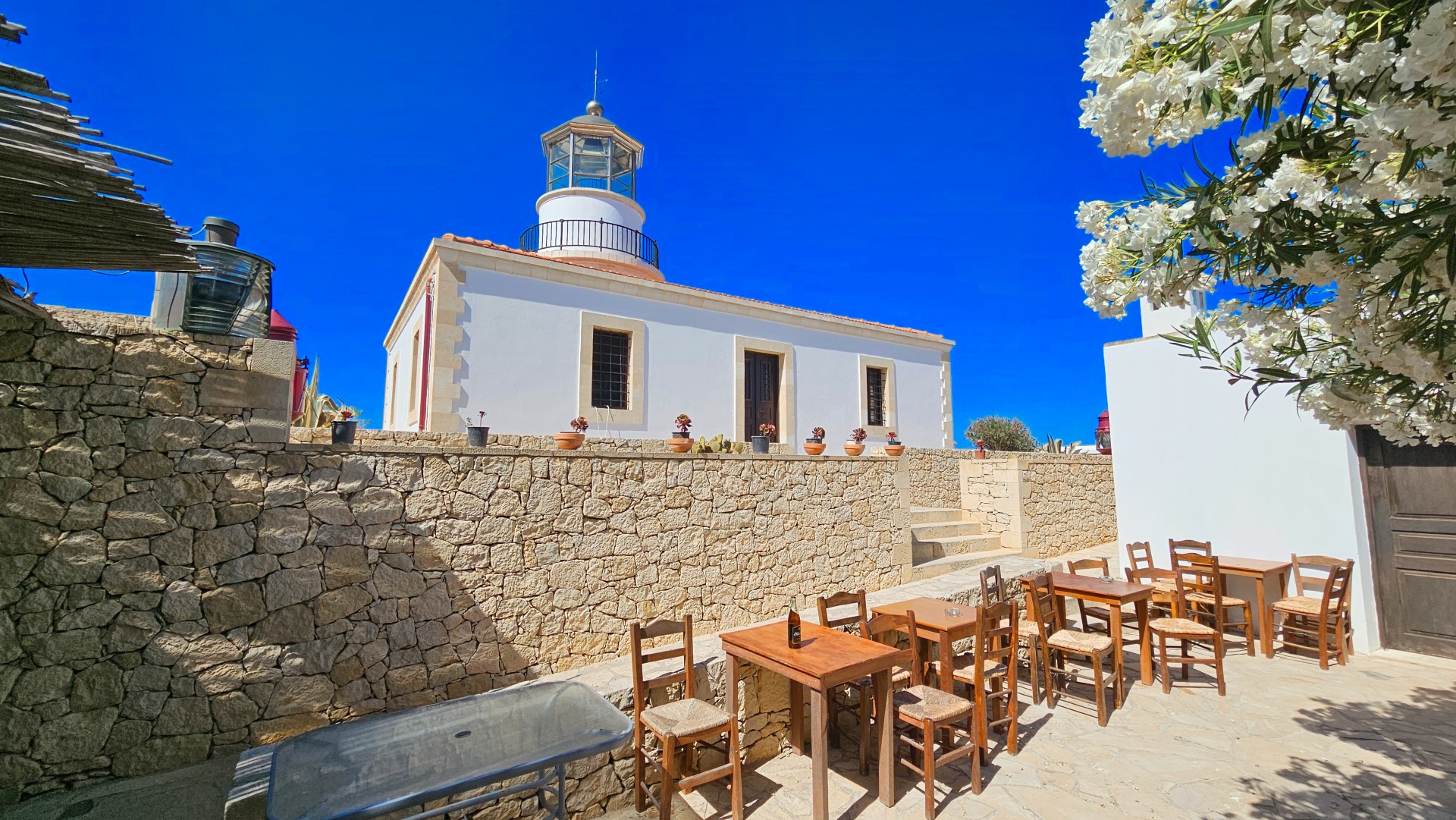
Lighthouses are modern monuments that highlight the position of Greece in world naval history. On the shores of Crete there are some masterpieces of lighthouse architecture, unfortunately abandoned by local government, fading out due to salt and sea. The most important lighthouses of the island are the lighthouses of Aforesmenos (Agios Ioannis cape), Gavdos, Elafonisi, Cape Drapanos, Cape Sidero and the lighthouses in the Venetian harbours of Chania and Rethymnon.

Read more ...

Museums

Museums

The island's archaeological importance is highlighted through museums and archaeological collections. The Archaeological Museum of Heraklion houses the most important findings of the Minoan civilization. Treasures dating back from the Neolithic to the Roman Era can also be viewed in the archaeological museum of Chania, Rethymnon, Sitia, Kissamos and Arhanes. The new museums of Messara and Ancient Eleftherna are in operation, while the museum of Agios Nikolaos is under maintenance. Important local archaeological Collections operate at in Ierapetra, Myrtos and Gazi. The Historical Museum of Crete offers an overall picture of the history and culture of Crete from the early Christian times to the 20th century, while seasonal exhibitions include subjects of Byzantine or modern art, important personalities of Greece and presentation of historical events. Chania city is home to the Historical Archive of Crete with more than 170 archival collections and the second largest Nautical Museum in Greece, which aims to preserve the great maritime tradition of Crete. The Byzantine Museums of Heraklion, Chania and Rethymnon are also very special venues dedicated mainly to ecclesiastical art. The war collections and archives intend to commemorate the resistance and struggle of the Cretans against the various occupiers of Crete. The most important of these are the War Museum of Rethymnon at Chromonastiri, the Historical Museum of Vorizia, the Museums of National Resistance at Therisso and Heraklion, the Historical Museum of Keramia, the Museum of Skalidis at Pervolia, the War Museum at Askyfou and the Military Collection of Argyrakis at Episkopi. Additionally, the German Tunnels at Platanias and Makasi Gate at Heraklion Walls are important historical sites. Museums and collections that highlight the life and work of great Cretan authors, artists and politicians are met all over the island. Venues dedicated to the life and work of the national leader Eleftherios Venizelos are open to visitors. These include the house where he was born at Mournies, his house at Halepa, the Historical Museum at Therisso and the Museum of Venizelos at village Agios Georgios. A very interesting museum dedicated to the great author Nikos Kazantzakis operates at his birthplace, Myrtia. Moreover, visitors can visit the house, where the great Cretan painter El Greco is believed to have been born at Fodele, and the Gate Bethlehem at the Walls of Heraklion, where objects used for the film El Greco are exposed. Lastly, Viannos houses a museum dedicated to the author Ioannis Kondylakis. It is worth visiting venues about nature and science, such as the Natural History Museum, the Aquarium of Crete at in Gournes, the Museums of Cretan Herbs and Fisheries of Kolimvari, the Geological Museum of Zaros and the Museum of Chemistry in Chania. Other special museums in Crete are the museum of Classical Vehicles in Exo Lakonia, the Museum of the National Soccer Team and the Museum of Typography in Chania, the Museum of Musical Instruments at Houdetsi, the Wax Museum at Zoniana, the Museum of School Life in Nerokouros and the Museum of Acritans of Europe in Paleochora. Most museums in Crete are dedicated to the daily life of the Cretans, mainly by exposing objects from rural tradition. Very nice collections are exhibited at the folklore museums of Lychnostatis in Hersonissos, Chania, Vori, Arolithos, Tylissos, Rethymnon, Agios Nikolaos, Sitia, Vainia, Therisso, Gavalohori, Piskopiano, Somatas, Ini, Asites, Handras, Kandanos, Palekastro, Vrahassi, Gavdos, Pefki, Hamezi, Mohos, Spili etc. Traditional watermills in Zakros and Chromonastiri are open to visitors. Similarly, venues related to the olive tree include the Museum of Olive in Vouves, the old oil mill (fabrica) of Arhanes and Vatolakos. Show Map

Read more ...

Tradition

Tradition

Crete’s long and multicultural past is reflected in every aspect of modern Cretan life, including the language, dance, music, food, arts and traditional crafts. The folk tradition of Crete remains an inexhaustible and living cultural heritage. Customs, beliefs, material and spiritual traditions, as well as habits rooted in antiquity, have shaped the core of life on the island and continue to survive through the generations. The Cretan dialect is regarded as one of the oldest surviving Greek dialects and has long attracted scholarly interest. Dozens of its words have ancient Greek or archaic origins, while the centuries of Arab, Venetian and Ottoman presence have also left clear traces in its vocabulary. Descendants of Zeus Hardened by the difficulties of life and the island’s rugged landscape, the people of Crete remain genuine, proud and warm-hearted. They take particular pleasure in sharing their feelings, food and hospitality with visitors. The Greek word philoxenia, meaning hospitality, derives from the words philos, meaning friend, and xenos, meaning stranger or guest. Its deeper meaning is therefore to welcome a stranger and treat them as a friend. As the descendants of Cretan-born Zeus, the protector of strangers and god of hospitality, Cretans are renowned for welcoming visitors openly and without expecting anything in return. Their hospitality is founded on generosity and respect for other people. It is almost impossible to stop at a traditional coffee shop in a Cretan village to ask for directions or assistance without being offered at least a glass of raki, often accompanied by a small plate of local food. Myths Crete is inseparably connected with myths and legends that reach back to the earliest centuries of Greek history. According to mythology, it was here that Rhea gave birth to Zeus, who would later become the father of the gods and humans and the protector of hospitality. Both the Diktaean Cave at Psychro and the Idaean Cave are associated with his birth, protection and upbringing. Later, Zeus assumed the form of a white bull and abducted the beautiful Phoenician princess Europa, carrying her across the sea to Crete. Beneath the evergreen plane tree of Gortyn, which survives to this day, Zeus and Europa were united. From their union was born Minos, the legendary king of the first great European civilization, the Minoan civilization, while the continent of Europe took its name from Europa. It was also on Crete that the ingenious craftsman Daedalus designed the famous Labyrinth in which the Minotaur was imprisoned. According to the myth, Daedalus later defied the limitations of the human body and escaped from the island by flying with his son Icarus. Inside the same dark Labyrinth, Theseus killed the Minotaur and managed to find his way out by following Ariadne’s thread. The bronze giant Talos, often described as the first robot of mythology, was the tireless guardian of Crete. He circled the island three times every day, protecting its shores from approaching enemies, until he was eventually defeated by the Argonauts. Legends of supernatural beings and apparitions remain alive even today. The best known are the Drosoulites, shadowy figures said to appear outside the fortress of Frangokastelo during the first hours of dawn, usually between May and June. According to tradition, they are the souls of warriors who died there while fighting the Ottomans. Musical Tradition The island has a long and exceptionally rich musical tradition, with roots reaching back to antiquity. It was strongly influenced by Byzantine music and enriched over the centuries by the musical cultures of the wider eastern Mediterranean. Through family gatherings, village festivals and religious celebrations, residents and visitors are introduced to the distinctive musical culture of Crete. Cretan music is considered one of the most vibrant folk traditions in Greece. It has not remained frozen in the past, but continues to evolve and creatively incorporate contemporary musical elements, while still expressing and commenting on modern life. Improvisation is one of the defining characteristics of Cretan musicians and dancers. Performers do not merely repeat a fixed melody, but enrich it with spontaneous variations that respond to the atmosphere of the celebration and the movements of the dancers. The dancers, in turn, improvise their steps and figures in constant dialogue with the musicians. The mantinades are short rhyming couplets that express the feelings, thoughts and everyday experiences of the Cretan people. They speak of love, sorrow, separation, friendship, honour and every emotion that springs from the sensitive Cretan soul. Particularly impressive are the traditional mantinada contests, during which one improvised couplet follows another as an answer or challenge to the opposing singer, sometimes continuing for many hours. In western Crete, groups of men traditionally sing the powerful rizitika songs, one of the oldest surviving forms of the island’s musical and poetic heritage. The Dances of Crete According to ancient tradition, Greek music and dance first appeared on Crete, where Rhea, the Mother of the Gods, taught them to the armed Kouretes as part of their ritual purification. The most celebrated ancient Cretan dance was the warlike Pyrrhic dance. Many of today’s Cretan dances are considered distant echoes of the circular and martial dances of the Kouretes. Traditional Cretan dances are performed by both men and women, who often wear the magnificent traditional Cretan costume during formal events. Some dances are fast and vigorous, while others are slow and restrained, yet they are always dynamic and imposing. When performed by groups of men, their movements strongly recall ancient warrior dances. To the sound of the Cretan lyra or violin, accompanied mainly by the laouto and, more rarely, by instruments such as the boulgari, askomandoura or thiamboli, the dancers form a circle and perform the elaborate steps of the traditional dances. The first dancer, usually a man, is supported by the hand of the second dancer and performs individual leaps and skilful figures known as talimia. Every part of the island has its own traditional dances, many of which preserve their ancient circular form and continue to be performed regularly. The best-known Cretan dances include the Pentozalis, Kastrinos Pidichtos, Sousta, Siganos and Chaniotikos Syrtos. The famous melody of “Zorba the Greek” by Mikis Theodorakis was based on an older form of the Chaniotikos Syrtos. The Cretan Diet The Cretan diet embodies an entire philosophy of life. It is not limited to particular dishes or ingredients, but is closely connected with the traditional way of life, seasonal food, family gatherings and the social role of the shared meal. The inhabitants of this hospitable island developed their ancient dietary habits around the products generously provided by the Cretan land: olive oil, wheat, wine, honey, cheese and dairy products, as well as wild greens and aromatic herbs. Traditionally, meat appeared on the table less frequently, especially because of the long fasting periods observed throughout the year. Gatherings around the table, accompanied by music, conversation and dance, remain one of the favourite customs of the Cretans. Food is not simply a means of nourishment, but a way of expressing hospitality, strengthening social bonds and sharing the produce of the land with family, friends and visitors. Festivals and Celebrations Cretans have always loved the arts, public gatherings and celebrations, which allow them to meet, communicate and share their emotions with others. During summer evenings, towns and villages throughout the island host art exhibitions and festivals devoted to theatre, music, cinema and dance. Concerts are organised in stadiums, archaeological sites, Venetian fortifications and small open-air theatres in the countryside. The feast days of saints are traditionally accompanied by large village festivals, with the sound of the Cretan lyra, traditional dances and communal meals in village squares or beside churches. Many of the customs associated with these celebrations are believed to preserve elements whose roots reach as far back as Minoan Crete. Numerous local festivals are dedicated to products associated with a particular village or region and always provide an opportunity for a large celebration. Festivals devoted to potatoes, raki, courgettes, traditional bread, wine, myzithra, graviera cheese, snails, cherries and apples are only a few examples. They are generally accompanied by music, dancing and free tastings of the local products. When the short Cretan winter arrives, the desire for celebration does not disappear. Groups of friends gather around the rakokazana, the traditional raki distilleries, where the ritual of distilling tsikoudia soon develops into a lively feast with food, music and dancing. The Culture of Water and Wind Crete’s limited water resources and uneven rainfall led its inhabitants to construct major works for collecting and transporting water to settlements and cities. Surviving sections of the Roman aqueduct that supplied ancient Hersonissos remain impressive, while the aqueduct bridges of the enormous Venetian Morosini Aqueduct carried water from springs near Archanes and Skalani to the heart of Candia, present-day Heraklion. In the larger cities, water was distributed through elaborate public fountains. The best known is the Morosini Fountain, also known as the Lions Fountain, situated in the centre of Heraklion. In parts of Crete where water was scarce, particularly in mountainous Mirabelo, large stone-built cisterns and wells were constructed and many of them survive today. Although Crete is not known for large rivers, the island possesses some of the most beautiful stone bridges in Greece. The most famous is the arched bridge of Preveli. Of particular archaeological importance are the ancient bridge of Eleftherna, constructed using a corbelled system, and the Elliniki Kamara at Vrysses in Apokoronas. In western Crete, where rainfall is more abundant, numerous watermills were built to grind grain. In the drier landscape of eastern Crete, however, the inhabitants turned to the power of the wind. This resulted in the creation of large groups of windmills known locally as milotopia. The windmill complex at Ambelos, on the edge of the Lassithi Plateau, is the largest traditional stone windmill complex in Greece, while many other windmill sites survive in mountainous Mirabelo. Apart from grinding grain, the need to pump water for the irrigation of extensive cultivated areas inspired the inhabitants of Lassithi to construct lightweight metal windmills. These simple but ingenious machines drew water from wells and once turned in their thousands across the plateaus of Lassithi and Ziros. During the middle of the 20th century, the Lassithi Plateau had approximately 12,000 metal windmills. Together they formed what has often been described as the first large wind farm in the world, with an estimated total power of around 5 MW.

Read more ...

Also read:

Download Free Premium Joomla Templates • FREE High-quality Joomla! Designs BIGtheme.net